


The Role of Protein in Our Bodies: Why Balance is Key
Updated: Sep 22, 2025
Protein is an essential nutrient that makes up about 15–20% of the human body mass. For a 70 kg person, that’s around 12 kg of protein. These proteins are crucial for maintaining and repairing the body, supporting growth, and ensuring proper development. Protein is everywhere in your body: your bones, skin, hair, enzymes, and immune system cells. In fact, you’re made up of over 10,000 different proteins, each performing specific functions to keep you alive and healthy.
However, while protein is vital for health, both deficiency and overconsumption can have negative consequences. In this article, we’ll explore protein’s functions, sources, and how much is enough to maintain balance.

What is Protein, and Why is it Essential?
Protein is a macronutrient made up of 20 amino acids. Of these, 9 are essential amino acids, meaning we must get them from food because our bodies cannot make them.
The remaining amino acids? Here’s where it gets fascinating: our liver is a metabolic powerhouse. It can take proteins we’ve already consumed, break them down into their amino acid building blocks, and transform them into the amino acids our bodies need. This process is critical to keeping us functioning, which is why we call the liver the "master metabolic organ." Without it, life would be impossible.
Proteins are vital for many functions, including:
Growth and repair: Proteins build and maintain tissues, including muscles and organs.
Hormones and enzymes: Most enzymes and some hormones are made of proteins, regulating countless processes.
Immune function: Proteins are key to producing antibodies, ensuring a strong immune system.
Neurotransmitters: Proteins are precursors for neurotransmitters, like dopamine, serotonin.
Transport: Proteins help move nutrients and compounds throughout the body.
How Much Protein Do You Need?
Our protein needs vary, depending on various factors, including:
sex
age
amount of type of physical activity we are engaged in
fitness goals
health conditions
menopause status
appetite-suppressing medications, such as Ozempic
The World Health Organization (WHO) recommends a daily protein intake of minimum 0.83 grams per kilogram of body weight for sedentary adults.
If you are physically active, aim for 1-1.2g per kg of bodyweight. However, certain populations may require more:
Older adults (65+): 1.2 g/kg/day to prevent muscle loss.
Women in peri- and postmenopause: 1.2g /kg/day
During rapid weight loss (for instance while using GLP-1 RA weigh-loss drugs, like Ozempic, Wegovy: 1.4 g/kg/day
Athletes or those building muscle: Up to 1.6 g/kg.
For safety, 2 g/kg/day is considered the upper daily limit for healthy adults.
Example: A 70 kg adult should consume between 58–140 g of protein daily, depending on their activity level and goals.
For building muscle, experts recommend spreading protein intake evenly over meals, with 0.4 g/kg per meal, ideally across four meals.
What Happens When You Eat Too Much or Too Little Protein?
Too Little Protein:
Muscle wasting and reduced strength.
Poor immune function, leading to frequent illness.
Edema, hair loss, and skin changes in severe cases.
Too Much Protein:
Conversion to fat: Excess protein is metabolised by the liver and converted to fat if not needed for energy by the body.
Strain on kidneys and liver: The body must eliminate nitrogen (a byproduct of protein metabolism) via urine, which overworks these organs.
Potential health risks: Long-term overconsumption can lead to conditions like gout or increased allergy risk.
If you consume protein, but you are not engaged in physical activity, especially resistance training, you won't build muscle.
For most people focusing on the protein source (whole foods) is more important for good health than the total amount of protein you get from food.
Protein Sources: Animal vs. Plant-Based
Both animal and plant-based foods provide protein, but they differ in amino acid profiles:
Animal-based proteins (e.g., eggs, milk, fish, meat) contain all essential amino acids in optimal ratios. However, they can be high in saturated fat, like beef, pork.
Plant-based proteins (e.g., beans, seeds, nuts, whole grains) may be lower on certain essential amino acids, but they contain all 20 amino acids. Combining foods like grains and legumes in your meal (e.g., rice and beans) ensures you get adequate amounts of all amino acids.
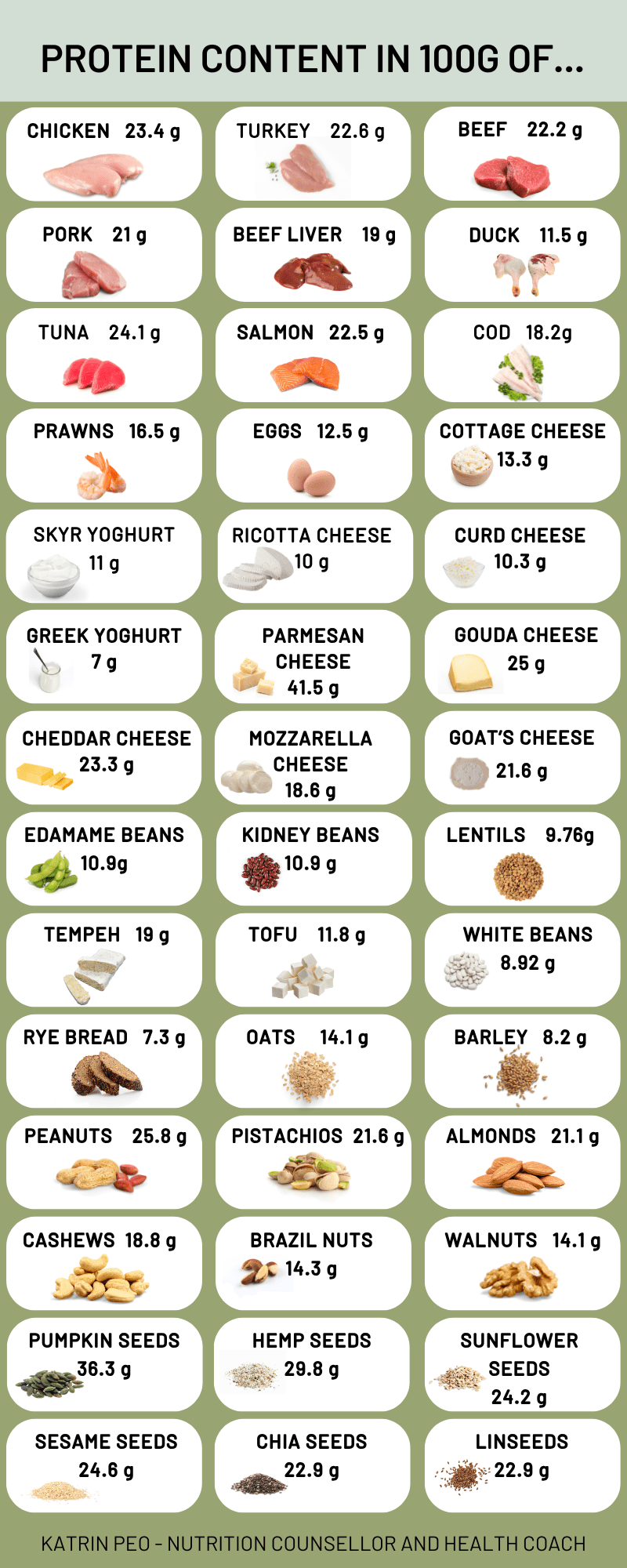
Here you can find foods in different food groups and their protein content in 100g. It's important to note here that's absolutely possible to get all the nutrients you need, including protein, from plant-based sources.
Protein’s Role in Energy and Growth
Protein provides 4 kcal per gram. For most adults, protein should make up 10–20% of daily caloric intake.
For a 2,000 kcal diet, this translates to 50–100 g of protein per day.
For low-calorie diets or older adults, protein intake should lean toward the higher end (18–20% of calories).
Protein and Muscle Building: Myth vs. Reality
It’s a common misconception that consuming large amounts of protein will continuously build muscle. In reality:
Muscle growth has a limit; excess protein won’t be stored in muscles.
To optimise muscle growth together with resistance training, consume 1.6 g/kg per day, distributed across meals.
Example: A 70 kg individual aiming for muscle growth would need 112 g of protein daily, divided into 28 g per meal (four meals).
How Does the Body Process Protein?
Digestion: Protein is broken into amino acids in the stomach and small intestine.
Utilisation: Amino acids are used to repair tissues, produce enzymes, or support immunity.
Excess: Surplus amino acids are metabolised in the liver:
Converted to glucose or fat for energy or storage!
Byproducts (e.g., ammonia) are detoxified into urea and excreted via urine!
Practical Tips for Balanced Protein Intake
Choose whole foods: Natural sources like eggs, beans, fish, poultry, nuts and seeds are ideal as they provide essential vitamins and minerals alongside protein.
Limit processed protein supplements: Protein powders can help in specific scenarios (such as people with certain health conditions) but often lack the micronutrients (vitamins and minerals) found in whole food as well as very often contain unnecessary ingredients like artificial sweeteners (sucralose), emulsifiers, thickeners etc.
Combine plant-based sources: Pair different proteins (e.g., grains + legumes) to get optimal amount of all amino acids if you are on plant-based diet.
Track your needs: Use online tools or nutrition apps to calculate protein content in meals. For example: NutriData, Cronometer, MyFitnessPal.
Protein is indispensable for growth, repair, and overall health. By consuming a variety of protein-rich foods—whether plant or animal-based—you can easily meet your needs. However, balance is critical: eating too much or too little protein can have long-term consequences. Aim to tailor your intake to your body weight, activity level, and health goals for optimal results.
If you want to improve your diet, you have tried diets and they have not worked for you and you want to determine for yourself a sustainable healthy diet that works for your body and with your lifestyle, do reach out to me to schedule a session for nutrition counselling at info@katrinpeo.com


Excellent breakdown of protein's role in the body! The detail that we're made of over 10,000 different proteins really drives home how fundamental this nutrient is. Your balanced approach—explaining both deficiency risks AND the liver/kidney strain from excess—is so important. The practical tips on whole foods first, combining plant sources, and the 0.4g/kg per meal guideline for muscle growth are spot-on. As one of the top private label supplement manufacturers, Nutrikal agrees that quality whole foods should come first, with supplements playing a targeted role when needed. Thanks for this comprehensive guide!